Have you ever had your ankles licked at work?
That’s an experience I had at a new job this week.
At the job interview, there was a mild air of desperation as the managers upsold the more ‘senior‘ role that I was ‘much more suited‘ to than more general, part time role I was applying for. My reaction was shock and amazement as my ego sat up and stroked her hair.
Now I know why.
From the first morning of induction, we were locked in the conference room because my client was thumping the windows and swearing loudly about how much she hates me. The next day I hear coming in at number #1 on her ‘future goals list’ is ‘Get Amy fired‘ as she eyeballs me whilst draped over reception articulating the words ‘power’ and her ‘challenge’.
This is from someone who had rapport with her previous case manager and faced with a conveyor belt of changing staff and caregivers, she is fighting hard in a pretty powerless situation.
It’s pretty intense working on the coal face of mental health. Ten clients with heavy stories and mental health diagnoses live onsite in adjoining one bedroom units. It is my job to oversee the day and troubleshoot any disagreements, disputes or episodes that may occur. Learnt at uni that emotions are contagions, now seeing it in practice, it can only be described as mercurial. Watching how the shifting sands change rapidly is a lesson for me to not get too attached to how I think things may go, and to live wholly in the every changing moment!
At handover, we sit with diagrams of coloured zones and conversations about clients ideally being in the green ‘wise mind’ zone where things are flowing and avoiding escalation to the red ‘risky’ mind where adrenalin and cortisol take over. But this same learning tool is used to educate staff on their own wiring as we aren’t immune to the waves. Every time, I cope it from my client, a staff member has been there with a knowing smile offering support, the oxytocin hit may be enough to keep me coming back tomorrow.
I did expected a challenge, but I didn’t expect to be the target of such intense behaviour. Of course, it is possible to rationalise it in terms of amygdalas; inability to emotionally regulate and don’t take anything personally but honestly, I feel like I’ve been thrown into a war zone. By lunch time on the second day, I notice I have become more desensitised.
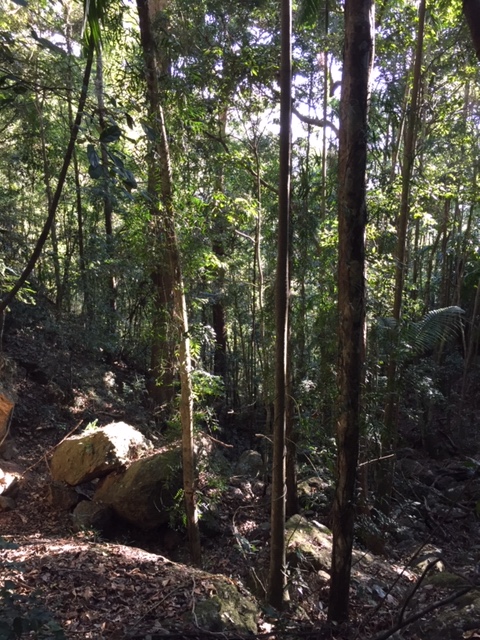
Self care has zoomed up the list. I drive to a nearby forest on the way home forcing myself into a jog-walk spontaneously stopping to hug a wise tree elder to clear the stress and mild panic experienced that day. I can feel the cortisol spikes hoping to release them. Some of my predecessors fell to the scary burnout.
Social norms exist in another stratosphere and I’m jumpy as I’m escorted to my car in the hope that my client won’t find which one it is as property damage has happened before. I get inside and exhale. Putting all the skills to work: some laughter, some philosophy, some getting physically fit.
When we work with the horses, we demonstrate firm boundaries. Otherwise, the large animal may either mindlessly walk on top of you and/or be in a place of unease and fear at who is in fact the leader which makes them feel unsafe. It is these skills that work best with my client. With a horrific history of insecure attachment and distrust, she requires clear boundaries and crystal clear communication to build trust and feel safe. The ‘no hands on’ rule is constantly tested when she latched onto my ankle in reception refusing to let go. My horse mentor talks a lot about ‘fight, flight or freeze’ and how we have a predisposition to one of these. My client is a fighter- fierce, vocal and lightning sharp. I am a recovering fleer who now holds my ground and I’m learning to dial up when necessary. This job is going to call on me to embody these on a daily basis.
Sometimes we don’t get what we expected, but it may be just what we need. Here’s the philosophy part: walking it out to see how far I can go with it. At the moment, I’m not seeing a huge silver lining but I know there is one. I know I have choices available and that I create my own path. For now, being in the fire with a fighter is challenging, beyond my map to date. It is questioning the beliefs I hold about my self, the helping profession and wider system at play, what is enabling and empowering behaviour. Everything will be turned over and hopefully deeper truths accessed along the way.
Send me your love, I will gratefully receive it.


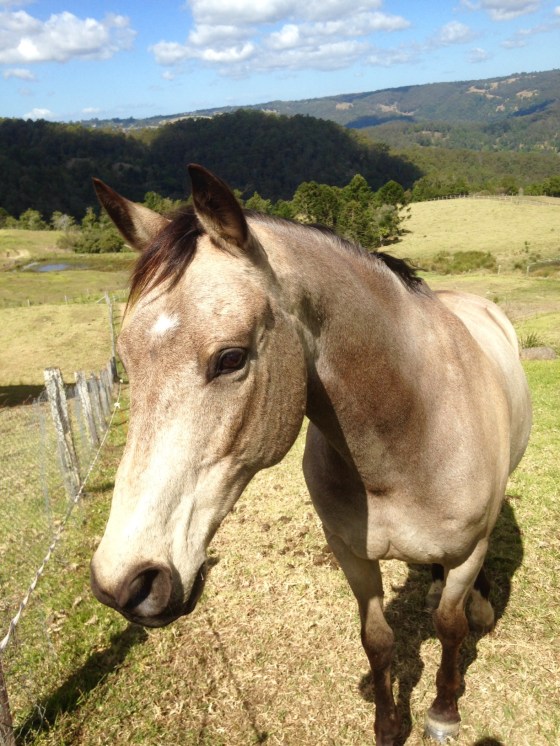
 On a clear winter’s day, sun streaming down, I walk into the horse paddock, tired I lay down, covering my face with my hat. Spirit, a buckskin horse looks on wary at first, then comes to sniff and nudge me, ‘Are you alright?‘, assured that I am, he turns and parks his rear end to me 10 metres away.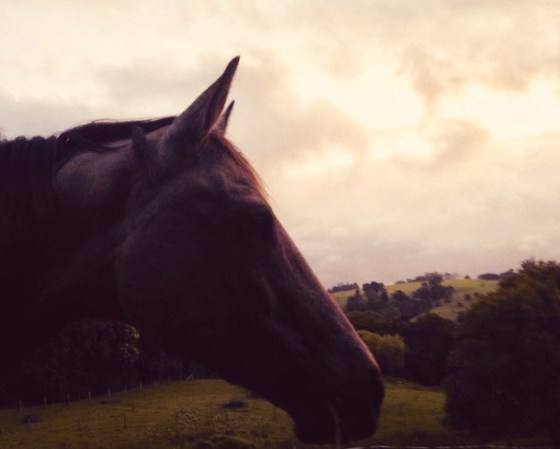
 Turn an age, turn a page




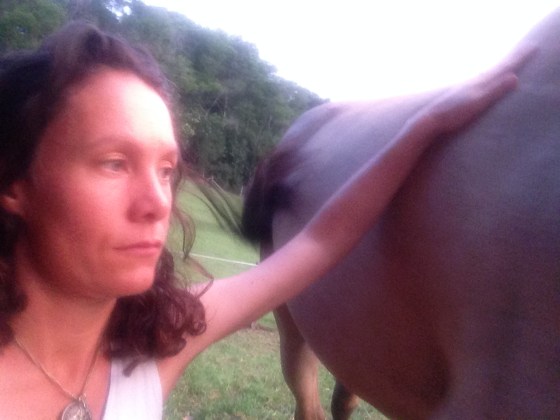
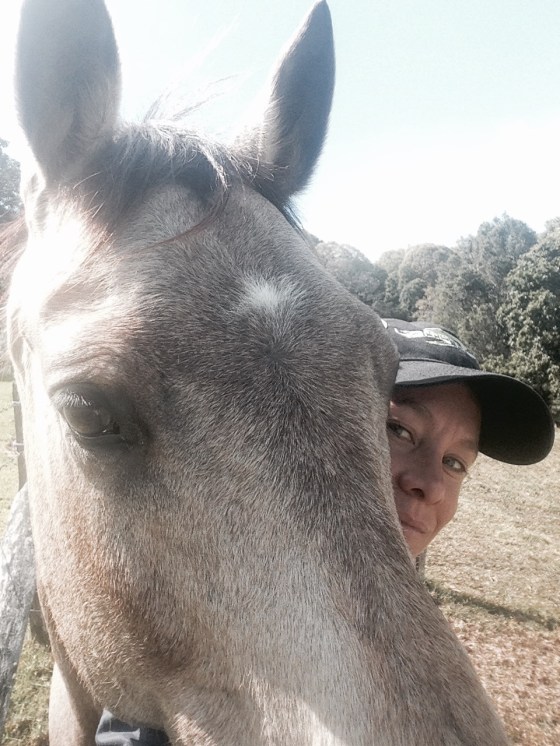 Over the course of the program, students become aware of what’s going on inside their bodies. They learn to find out what’s ‘running’: be it fear, anger, frustration or any other emotion. Horses are super sensitive to picking up our emotions. By simply placing our hand on the body part where the unease is felt, we can dissipate the energy. We teach people how to do a body scan before approaching the horse and bring their energy within. Horses are sleuths when it comes to incongruency, a psychology term coined in 1950s. It happens when people are distracted, emotional and disconnected from their body. When someone is totally unaware of what’s going on inside them even if they are putting on a brave face or talking the talk. The emotion felt from them doesn’t match their behaviour. Horses don’t want to hang with us in this state as we’re unclear and potentially dangerous. However, horses willingly hold space for feelings, but they will only support once we honestly acknowledge our feelings, and become relaxed which happens naturally once we allow ourselves to feel.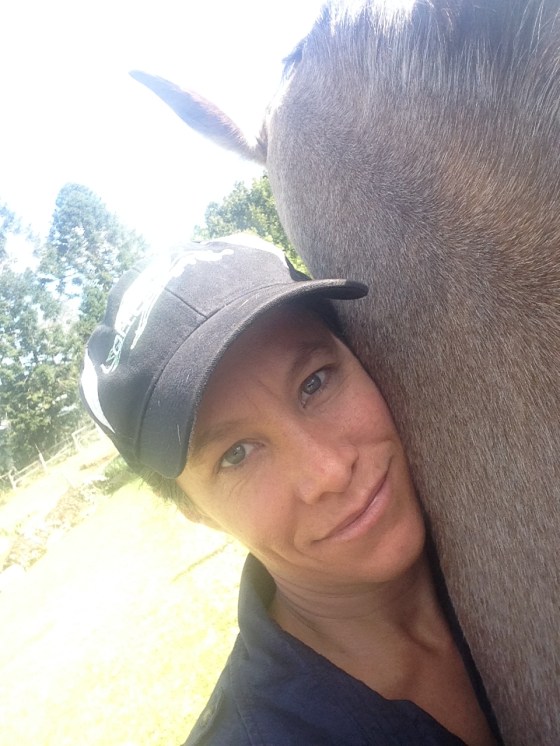


 Bang On About