Recently I read emails that you’d sent to friends and I heard your voice once more. The stretchy, sometimes frenetic, quirky self expression as you made attempts at funny word play and at times sexual innuendo nonsense in bids for connection.
How you held closely to this train of creative energy that burst forth, unsure of it, yourself, your world and what direction to take. How the world seemed so big, yet also too small for the amount of energy you had, a constant buzz with an incessant blurring mind that never stopped.
How could you fail with what you did not know? How could you trust skills you did not have to love yourself and to grow in relationship? How could you choose peace when all you knew was how to mask, strive, please, appease and think of others’ needs before yourself? How could you be grounded when all you knew was how to push yourself further into achievement? How could you be still when all you knew was to run or take flight? How could you relax when you were wired into overthinking and rumination held closely to your chest as bedtime stories? How could you find quiet when you only knew how to fix or think harder to problem solve?
Now nearly 25 years later, can you forgive yourself for what you did not know? Can you forgive yourself for your impulsive, narcissistic, self-absorbed, anxious wanderings? Can you forgive yourself for your regrets over treating others badly? Can you forgive yourself for your brashness and being fickle over big and small things? Can you forgive yourself for rash decisions that lead to what if regrets?
As your middle aged self, I can give you that, dear one.
I can scoop you up in my arms and shower you with the tenderness you craved yet didn’t accept. I can hold your hand and tell you it’s all going to be alright. Not because life is free of challenges or misfortune, but that even in spite of the pain and loss that is being human, you are loved and can express love. How one day you will learn to embrace the peace and quiet, and learn to love being in stillness.
With every year that goes by, there is an invitation to drop deeper into a relationship with self. There can be many selves, faces and parts of a story that make up one human.
As I listen to podcasts of people’s stories (shout out to current fav Heavyweight), I’m often in spontaneous tears for qour fragility, our hopes and our regrets, longing and loving as humans, a rare delicate species of contradiction.
Here I stand at 46, more wildness with smokey colored hair yet a steadiness within that was never there in my 20s. More grounded than my frenetic 30s of managing the necessary self-sacrificing involved in child rearing. The constant busyness surrounded with thinking about others and neglecting my own needs.
There are still myriads of oscillating moods and ladders/snakes to ride in this game called life. But I embrace the narrative of becoming in middle age, instead of the BS about loss of external ideals (beauty, allure, worth). The hard won lessons begin to line up, the way callouses form on well worn fingers.
I am seeing middle age in terms of a doorway, a threshold of sorts that we reach and it’s a holy undertaking. It’s not some fantastical window, it is quite literally a choice to let go of baggage or otherwise be drowned by it. Be weighed down by past regret, joints stiff with suppressed emotions, nerves jiggling with unease unless we take stock.
I remember the slow realisation that I was not who I thought I was. The slippery soup of resentment and discontent started to show its face in subversive ways and my mind would go into defending my actions as a way to collude and keep the status quo. It can be confronting to get real with yourself. It was unpleasant to see the hidden anger that I’ve pushed down since birth to maintain the lie we are sold about being too much if we show it, express or unleash it. Somehow, we won’t be as acceptable or palatable, we will wander into un-becoming territory and be shunned for it.
So where does the energy go? We swallow and suck in, bite our tongues and tense our jaws, until it lies dormant in our bones, a dense layer of stuckness. A sleeping tiger that we may not even know is there until the peri-portal of menopause comes to shake things up.
Maybe that’s the purpose to purify and burn off what lies behind our masks or any false self operating in this world. And isn’t this world a lot? There is no wonder we develop ways of coping and surviving. There is no shame in how we survived up until this point. But there is a reckoning, a call to evolve beyond our coping strategies, to become more em-body-ied.
To do that, we have to face what lies within these skin sacks we call home.
I strained a relationship with a dear friend because of my anger. I could feel the burning rumble of its power with thoughts trying to marry up yet not quite making sense, the justification and entitlement came swinging out, and it hurt someone that I love deeply. It surprised me with its force. I was not prepared for its edge, its righteous possible ancestral depth, it felt more than me. And it was not pretty. It was brief yet volcanic, and it’s taken years to walk it out, to reflect and even now I don’t kid myself to fully understand. But respect it I do. That energy had spite and spunk in its fury, something I’ve needed to release before it hurts others again or makes me sick. I see its root in learnt beliefs about holding on to emotions, to battling, being silenced and continual striving throughout my life as a mode of operandi, yet all the while stuffing this repressed e-motion down below my awareness.
It was a painful lesson to nearly lose a friend and have a relationship permanently changed. Yet this was the price needed for me to take action. And even in that action, I pussyfooted around, minimised feelings and built more landmines in the process as I avoided the truth. The truth being I was afraid of being confronted, of falling short, of not knowing where to start…
This is the wrath of peri menopause, and maybe this is why it can last a decade or so, because we need time to digest its force and its messages. It required me to stop kidding myself, stop projecting or making excuses, and get quiet enough to listen to the shadows within.
If they say our body is our temple, it involves a thorough clean out of all the rooms, looking under the floorboards, behind the curtains and below the windowsills.
Not easy but worth it for some level of peace on the other side.
If the ‘how’ question remains unanswered, it takes time and effort to retro fit this personalised journey. I needed to call in my support crew (women who were ahead of me), educate myself about this transition and ask for support from multiple sources. I’m still doing it.
‘The bittersweet side of appreciating life’s most precious moments is the unbearable awareness that those moments are passing’ Marc Parent
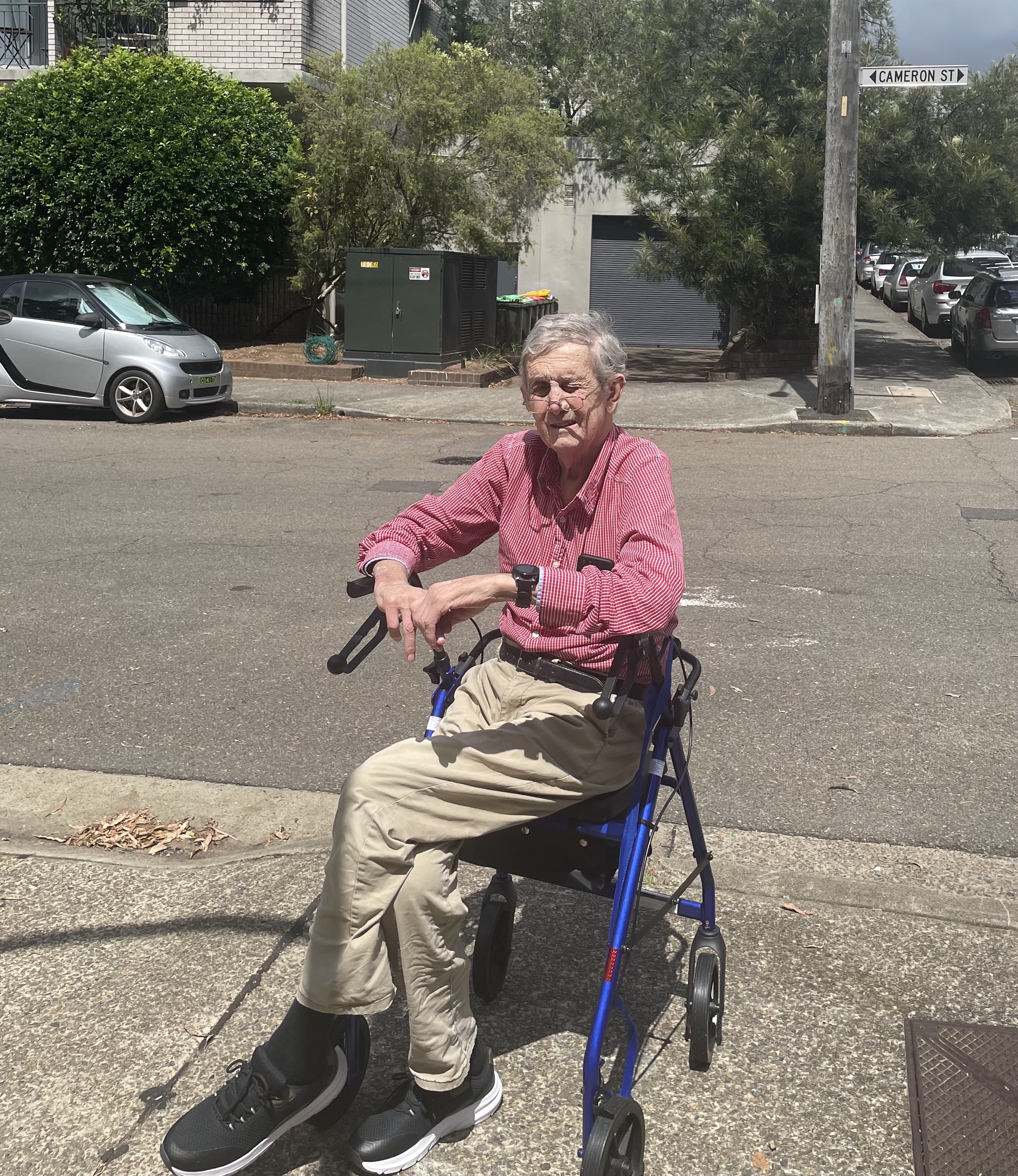
Supporting my dad at the end of his life is just that bittersweet. It’s full of anxiety, frustration and exhaustion as his pain levels increase, and his medical and surgical options reduce due to his fragility and chronic disease. It is a tightrope of stress, yet there are these moments of being incredibly aware of time, how exquisitely precious it is.
Will this be the last time I visit?
In his vulnerability, my dad has unlocked this softer side, where he cries and says the things he never said before. He apologises for being an arsehole at times, for being an absent parent, for choosing to focus on business over family, all the decisions he made, when he had his health and arrogance. Now he is a more stooped version, with all the time in the world, craving any scrap of attention his children can give him in their own busy lives. He asks about my health, my kids, my partner and shows a genuine interest in our lives.
Dr Nicole LePera, aka the holistic psychologist, a writer and instagram phenomenon, in researching her latest book discussed the premise that an emotionally available and healthy father is one of the most underrated forms of healthcare. Children can learn to regulate emotions and be comfortable with conflict resolution given steady role models. The data is striking in that present fathers reduce the risk of addiction, crime, mental health conditions, low self worth and domestic violence. In short, if men are able to develop emotionally (with the knock on effect to the next generation), our society could look very different and be much more functional.
My own father lost his father at 6 years old. Without any discussion around mental health or grief processing, the family got on with things the best they knew how, with a stiff upper lip and a protestant work ethic necessary when you are a farming family. This is not an isolated story, both my grandfather and great- grandfather died in tragic farming accidents. My grandfather died in a plane crash and the other was decapitated standing next to a logging truck. An ever present risk of living on the land.
Maybe this why I feel drawn to emotional expression and my line of work, supporting people through grief and mental health challenges. Seeing what can happen when there is inadequate support and insufficient ways to deal with grief; limited conversations about death generally and a fear of being vulnerable or in need of help overlaid by a culture of numbing, suppressing and bloody well getting on with it.
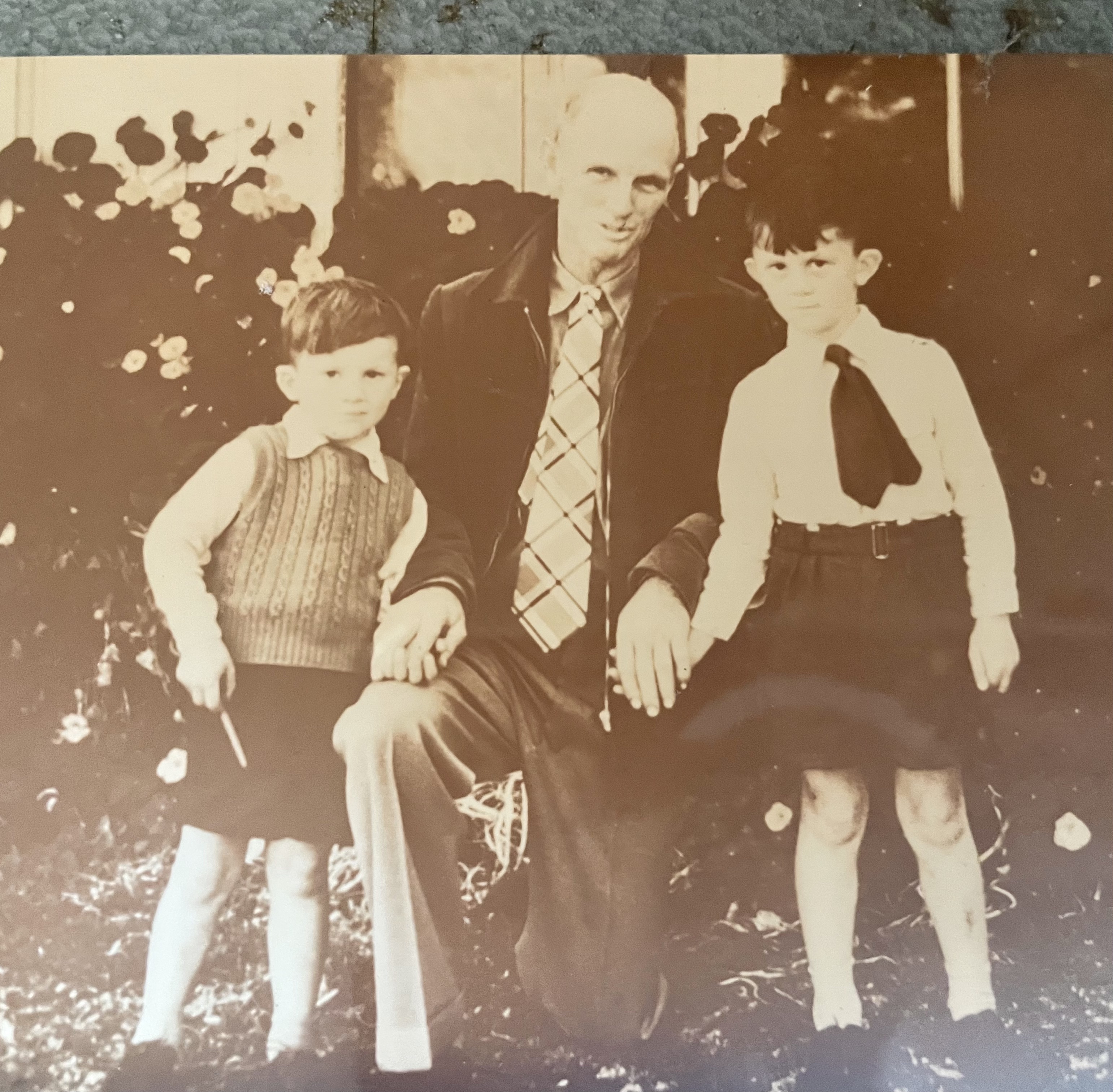
Photo taken just before my grandfather’s death with his two sons (my father right and uncle left)
Thankfully men are stepping up and claiming a much more active parenting role. There is hope that this trajectory will continue and as I spy my sons being attentive and caring towards their friends and able to talk about their emotions, I sigh with relief. The changes can be night and day, comparing how our fathers were raised to be ‘men’ to not cry or show emotion and they had to basically shut down in order to cope, versus how children are raised in more emotionally attuned and supportive environments today.
Yet as a society we have a way to go considering the rates of violence against women and the general malaise of our society. Approximately 75% of completed suicides are men. What can we do? Build communities where we actively reach out for support and normalise asking for help, ideally men supporting men.
People can change. Age has a way of doing that in the way life has a way of kicking our butts, humbling us and forcing growth. As I talk with my dad, he frets about the imminent cyclone affecting his family, and I see how much he cares. There is talk of him moving into care in my hometown. He is excited by the idea of being close to us, seeing his grandsons. Understanding that on some level, it is still all about him, that in his fragility, he needs me especially as my sister steps back due to having her own family and being somewhat burnt out caring for him.
It is bittersweet in the sense of all those years of missed opportunities where my dad was too busy, for example when at age 7, he put me on a plane back from Disneyland alone, with a layover at his friends, people I’d never met, because he wanted to stay in LA after he met a lady. WTF. My hard-won sense of self worth that came from having an absent father. Yet, the anger or hurt is no longer there, instead after processing it (took years), I’m left with a sense of acceptance of how things played out. That a series of events led me to forgiveness on my own terms, a process that cannot be moralised or half-arsed, rather an inner journey that developed my character in unexpected ways. And for that, with hindsight I’m grateful.
Life is unpredictable, sometimes cut short, without the space for resolution. With the time we have left together, I realise life is about healing, in the way that my dad is now able to give to me what he himself lost too soon, and within his limited capacity, he can be a loving and present father.
This week is our nineteenth anniversary of being officially boyfriend and girlfriend.
We met at a party at Bondi Pavilion early 2000s. A one week romance as one of us was moving cities and the other, continents.
Fast forward 2 years, I call him on a whim from London. He remembered my voice.
When I was home, our first date lasted 5 days.
To think that funny jester who convinced me to go for a ride on his dragster bicycle would still be making me laugh today, is mind boggling. We are very different people to those starry and often blurry eyed youth, but the spark for play and double entendre is still present. We have pseudonyms for each other and jokes about all the people we have had affairs with. I won’t go into detail to save poor reader, but let’s just say we’ve been very busy. Luckily, this fantasy has been enough of an inoculation to any real infidelity.
Tim said maybe we should tie the knot at 40 years, now that’s something to celebrate. I love the fact that he is committed to making it that far. But really, celebration of any love is worthy, any time, anywhere. Let’s just celebrate love.
So Timmy, thanks for being a mirror and a muse. A solid frame in my life, something I never realised I needed, until I met you. I’m not talking about your size, I can preempt your one liners after all this time.
You wrote a song about us, once we got together with a line in it,
‘My calendar has a name on every page’
That’s it baby, here we are, writing the next chapter. Happy 19th, I love you.
Navigating the borderlands between adolescence and young adulthood as a parent has been a practice in letting go. Simultaneously, life has other matters to settle as mothers we gingerly walk into the lowlands of peri/menopausal territory without a say and often with little map, our body holds the cards and historically our society has refused to give women much grace. It feels like a squeeze at times, as my sons become more independent, forthright and risk taking, I am becoming more reflective, inward and at times angry (feminine rage) as I come to terms with their opening, and my own aging. Of course, we are not meant to age messages tell us, we can fight back with body and beauty treatments, and more so be young at heart and vital, yet still undeniably there is the realisation that we will not enter the spaces where our children will go. There is a closing of one season, and an opening of another.
These years have involved some butting of heads around what youth want and what parents ask, a dance of some sort. I’ve found the shift and pace of societal change tricky to comprehend, in the way I was ‘brought up’ seems to be vastly different from what my kids are exposed to or seem to need. At the same time, there are values that I want to carry forward, and lessons they need to learn without my interference, as life delivers its necessary shaping.
As much as I love my kids fiercely with a lioness heart, I can also be controlling out of fear and worry that they will be hurt, and as they transition to independence, I need to let go. ‘Go’ is an active word, a doing word, yet I’ve come to feel that it is more of a process of being. Of allowing my heart space to grieve this transition and welcome in this new relationship with my children. To give buckets of compassion to my controlling, fearful self that was borne out of anxiety. Patterns developed from a childhood spent looking after my mother post divorce where she lived in a scattered fog. I learnt to preempt any hitch or hiccup and hyperaware of the emotional landscape around me. Many of us were parentified, asked to carry an emotional burden for our parents or forced to grow up early. When triggered, I start to micromanage everyone around me, somehow hoping for connection yet in reality, trying to make myself feel ok. If I jump on a drone and zoom out, I can see how disempowering this is for those I love, and how basically we don’t learn to trust ourselves if we are constantly told how to be and behave. This is what I had growing up: the oscillation between hands off parenting and being overbearing. I want to parent differently, to ‘break the cycle’ for the next generation, oh the pressure yet I can try my best.
Ultimately, I am coming to realise I am NOT in charge. Oh the arrogance and foolishness around this belief, I smirk at myself, yet the desire and allure of control feels so tangible, which is partly why we hold on to it for dear life. Yet this flimsy illusion has been shattered by my teacher, my teenager with his headlong, curious and explorative nature. And that is a gift, I am finally beginning to understand instead of react, to embrace with some level of humility rather than try and change him/circumstances out of wanting to feel safe. It is a human need to want safety, but we cannot take this at the expense of another’s freedom, especially if they are our children who we wish to grow up into independent, thriving and resourceful adults. At some point there is a reckoning, do you choose your relationship, or do you choose your fear? If we choose to relate to them, we do not have to condone everything they do, but we need to accept they are going to make their own decisions, mistakes (like us all) and learn by doing so.
Maybe life is about living and making mistakes, we are NOT going to get it right. And that’s ok, I’m a product of my upbringing and my kids will be a product of theirs. There is no perfect parent, and it is ludicrous to imagine perfection within the co creating improvisation that it is. We are fallible humans raising humans. I can be anxious, unrelenting, mercurial and grieving, yet also deeply loving and quick to own my shit. Showing our children our vulnerabilities and articulating why we behave as we do, especially when they disagree with our actions, can help our relationships. As a work in progress, my children continue to show me where I can grow. As the next gen lands, I am in awe of their emotional intelligence and the way they communicate, grateful for what I can learn if I am quiet and willing to listen.
When I was in high school for about two years, I use to watch every calorie I ate and over time it became easier to skip meals and restrict the amount of food I had as well. My memories are a bit hazy, but it felt good to have self control and as our society rewards us for this trait as well as having a slim body, it was quite a reinforcing cycle. In my teen mind during the huge change of neural pruning that was upon its networks, somehow I internalised the idea that if I can maintain this socially acceptable appearance (which I believed was the only worthy thing about me) I would feel better. Furthermore, our culture bombards us with billboards, magazines and social media sprouting thin/beauty ideals about how we need to look to be accepted and secure in the social hierarchy.
Fast forward decades, I work as a therapist at an eating disorder facility. Whilst piecing the puzzle together as to how someone ended up where they are is often met with a solid wall of denial about what their reality has become. This makes me ponder on how difficult it can be to accept our reality as it is and as humans we construct, invent, defy, push, control and try to fix our experiences into a shape that is more palatable. However, the problem is that it can wear us out until our original pain is buried 10 feet under layers of suffering. It is so often about trying to avoid our feelings that we end up with endlessly complex behaviours to keep ourselves busy and productive, distracted and numb. Over time, we are disconnected from our bodies, our inner selves, and of course our emotions that we don’t know who we are or what we actually feel about anything.
One does not have to develop a raging eating disorder to relate to this predicament. I would hazard a guess that our modern lives and societal messaging programmes us for carrying on with chronic busyness, productivity and achievement-focused intellectualisation in the fruitless pursuit of self worth. I am not against goal setting or taking on challenges that shape and define us. Yet I am against the idea that our self worth is tied to what we achieve, how we look or what we own. Marketing has shaped these ideals as the path to happiness and fulfilment. Well if that was the case, why are there a lot of high achievers from affluent backgrounds reaching perceived milestones with poor mental health and low self esteem?
We need more of the idea that we are inherently worthy just as we are. It’s a concept that secure attachment to loving parents who put the onus on effort rather than outcome (achievement) can help to foster. Yet even with this protective factor, many people simply inherit these feelings of unworthiness in our competitive Type A culture. I’ve seen emotionally sensitive, empathic people internalise these beliefs as gospel which takes some effort and support to shift, until they realise that this not good enough narrative is not part of who they are, but what they’ve learnt.
Basically, the system is broken, not us. The system that portrays that external validation will lead to peaceful, contented lives. It’s like placing your worth badge on the jacket of a capitalist patriarch as they walk out of the door, never to be seen again.
I’m done with being told how I should look, act, spend money or get in debt to have arbitrary satisfaction. Outside the shoulds and shouldn’ts, I’ll meet you there.
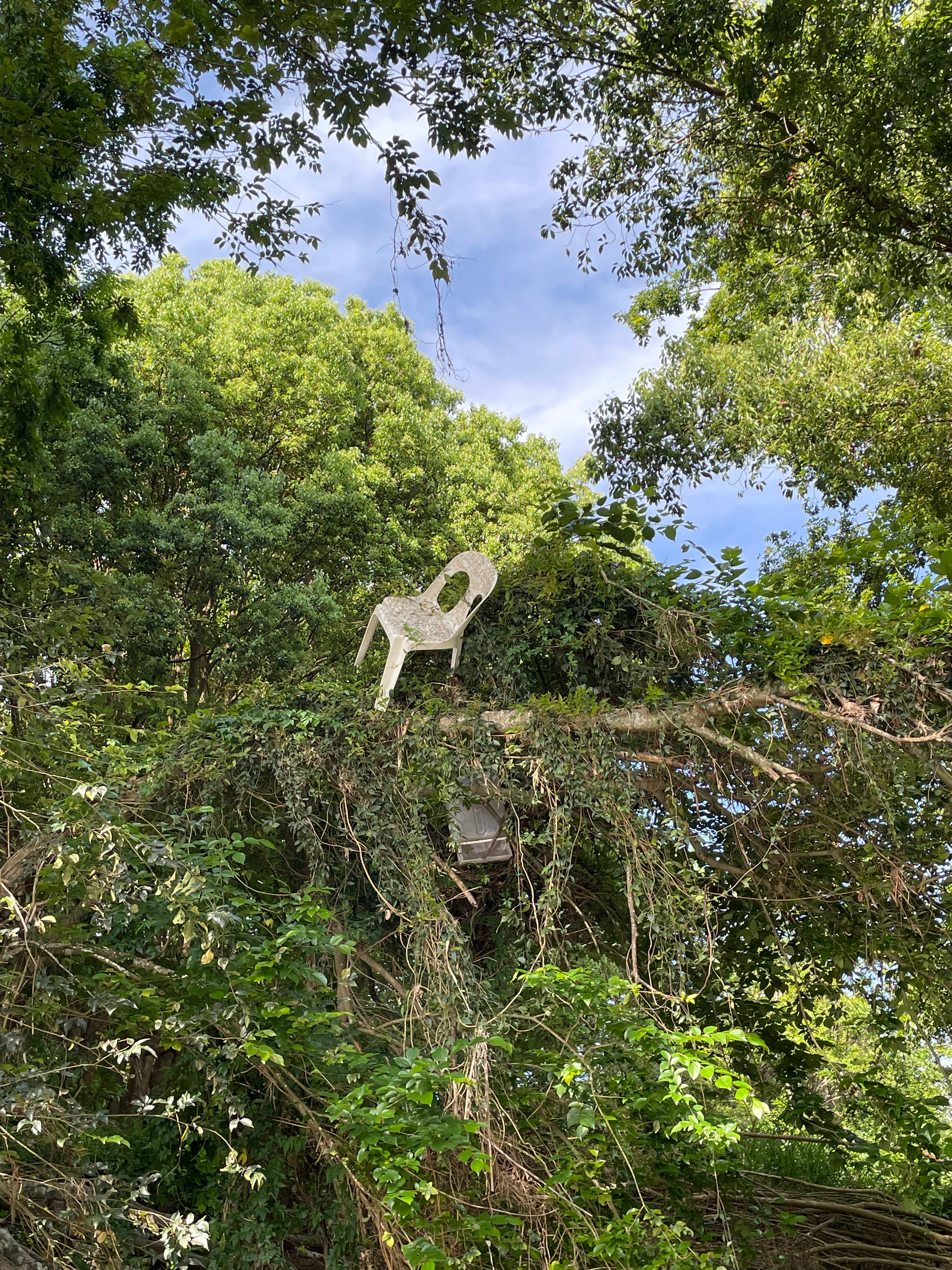
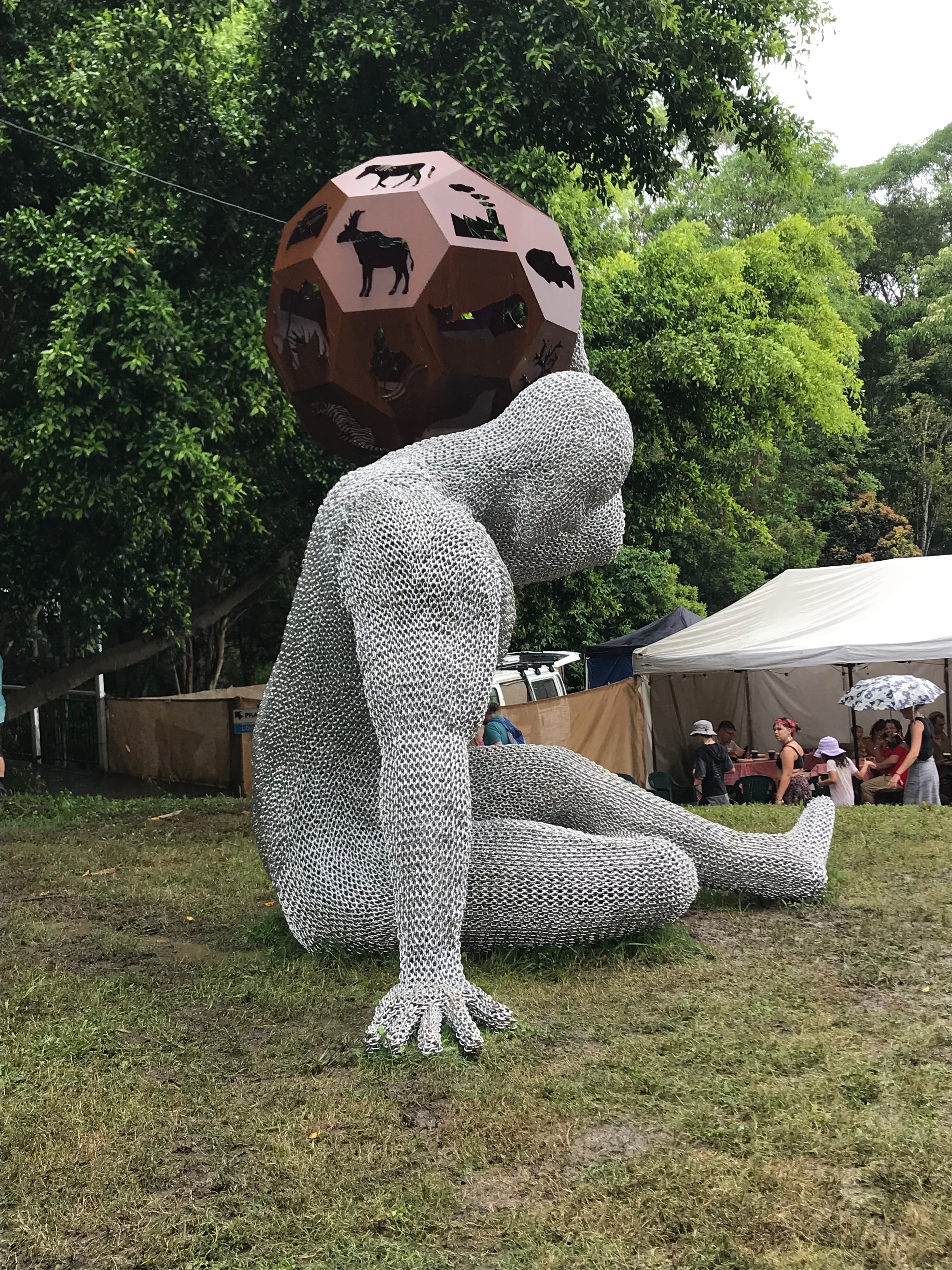
Sculpture at Woodfolk Festival 2022, artist unknown.
This year my youngest child went off to high school, and overnight he’s taller, stronger and more independent. All the qualities we hope to see in our offspring, and endeavour to foster as they walk the passage into adulthood. I’m happy yet there are bittersweet moments because as a parent I’m standing on one side of the door as they walk through into the world of tomorrow, I’m left behind. Their bedroom doors remain closed more often, the amount of physical affection reduced as they learn to regulate better and their peers are the place for more talk rather than mum and dad. As it should be, yet my heart strings tug for what was before, and the stark realisation that it won’t be repeated again. I will not bear any more children, I will not be sleep deprived either or drive heavy machinery under the influence of such dangerously little rest. Still the reality is like a splinter in my heart, and some moments tears well up spontaneously pinching me to be aware of the time we do have together. This time takes on an almost sacred glow: the spontaneous cuddles in the kitchen, ‘I love you mum’ phrases and time spent taxiing them around when they are a captive audience.
Was it always like this? Definitely not. Those early years, I was endlessly daydreaming of all the things I wanted to do or was going to do or missing out on. Now paradoxically, I have more time to do these things. It’s funny how we value things when we see the end of something. Thankfully we are not immortal.
A dear friend made the point recently that grieving is loving, it’s the same thing. I’ve been this process of micro moments of grief during parenthood. Grieving when they no longer want your company and simultaneously being happy for them as they go out into the wide world with eyes full of wonder and excitement. I watch my capacity to hold all my feelings. My belly jumps for them as they descend into their firsts- love, fight, peer exclusion, challenge; and at the same time my heart explodes with the love and hope for them to endure it all. This visceral feeling in my chest hits me as I am driving along a country road. My heart wooshes out of my chest seeking out my sons where ever they may be, silently and surely surrounding them with a mother’s love and protection that knows no end.
The way of a parent is to get comfortable with loving fiercely, a love that would rip heads off should someone have harmed my baby, but as they grow, the love is still as deep, but it is not healthy to interfere or fight their battles, in fact it is downright dysfunctional. So instead I must find a place to allow my love to run its course, and tend a garden dedicated to this love. My relationships with women at similar stages in their motherhood journey have become fruitful as we share the commonality of grief and change. I’m learning respectful distance allowing my sons space to come to me when they need on their terms.
As a prepare for this next phase, I am regularly allowing my grief its freedom and voice, to avoid damming it up and turning into resentment, which is basically unprocessed emotion. Resentment surely not, no way. My thoughts wander to the mother in law’s tongue, or otherwise known as the snake plant. How did our society name a plant as such? Coincidence? My hunch is that mothers feel deeply and unless we find a healthy release, these emotions can warp into all kinds of bitterness. There is no way I want to be that kind of mother in law, let alone elder or role model.
So you’ll find me, writing it out and spending this renewed free time feeding my soul’s needs. Dancing the ouchy bits and joy, two sides of the same coin, and by golly the joy when I see glimpses of the men my children will become. Thank you life for granting me this privilege to be their mother, and its gifts of pain and pleasure to experience. I pray keep them safe, but as life shows us all the road we must travel, they will need to stumble in order to grow, and feel pain in order to love. The great paradox, and I will be quietly here should they ever want or need me.
Crows surround us in the valley. Their distinct caw is heard upon waking and through out the day. A murder moves from the top hill to the larger Bunyas in the lower plateaus from morning to night.
They are here, watching and supporting.
Sometimes my awareness of them drops away and I don’t notice them for weeks. Much like a yoga practice slips off the agenda. But instinctively, it returns as I sit here tapping, I can hear their call.
Midnight blue-black feathers, the colour of the Void, the beginning of creation, the space of no-time, it is believed they simultaneously see past, present and futures fates. If we can learn to walk our truth, our personal integrity, keep our word, honour ourselves, respect all beings, we can balance the three fates, and move towards eradicating karma. Crow has the potential to guide us in our lives towards a clean death, which means remembering our past life as we enter the next. This was written in an animal communication book I own and often reference upon noticing new life on the land.
Maybe we can actually shape shift our lives into a new reality. Our actions and thoughts make up the minutiae and maybe, it pays to be aware of what we say and do. We all know this on some deeper level, the energetic nightmare that can be created from living unconsciously.
The magpie larks are back in the garden as well. We’ve had the male stay on all winter as he flies on to the bike rack and has conversations with himself in the kitchen window It’s gorgeous to see his wifey is back and they’re busy nesting. Nature at its rawness, last season the crows ate their eggs. Then the Currawongs came in and built two nests in the towering Fig, and shooed the crows away temporarily. Though a year later, the crows have kicked out the currawongs whose bell whistle has been absent for a few weeks now.
I don’t claim to be sure of anything these days but being in Nature helps to calm my nervous system long enough to realise that it goes on like it always has, regardless of human’s need to control and debate.
I hope we can all find some Nature space nearby to rest in.
the use of imagination or original ideas to create something; inventiveness.
Somehow I got this idea that creativity was something elusive or external to us when in fact it is as natural as breathing. I developed the belief that it was something others had in spades and I only had sloppy seconds.
Where do these beliefs come from and become ingrained?
I remember hearing self depreciating comments from family members.
“Oh no, I can’t draw. I haven’t got a creative bone in my body!”
Mum
Witnessing her stage fright and possible fears of looking stupid, failing or being made fun of, if her stick figures were disproportionate or wonky. We pick up these messaging early in school or society and carry them around like dead weight. I internalised it and shied away from art at high school.
Do we feel vulnerable and risk being exposed by creative pursuits? This idea perpetuated that you are either creative or you aren’t.
Quite a tragic thought to imagine lots of little repressed Salvador Dali’s, cut short by intruding creative predators. It seems that we are not alone in our internal critics, it comes with the human psyche. Dr. Clarissa Pinkola Estes, esteemed storyteller and captor of fairytales in her beautiful spoken word work, ‘The Creative Fire’ speaks of this cycle, of Hades (the abductor) who whisks Persephone (the archetypal bountifully delicious maiden) into the Underworld silencing her sensitivity, joys and creativity. The silencing can occur from outside us (culture or family system), but just as powerful it happens from within. The false coach and the undermining scout that exists within our own psyche can convince us that nothing we produce will live up to our/its unreasonable standards or be adequate or more heavily that we are inadequate.
The ‘Negative Mother’ complex is coined as the malicious doubter inside us, ‘You aren’t really going to put that out there are you? You can’t give that a go. Why don’t you just give up?’
If we give this voice power it can hold our creativity hostage. Understanding this is helpful in calling out the doubters, and getting on with getting on.
Making a creative life for ourselves.
Personally it’s felt like reclamation of lost bits, forgotten corners. Recalling joyful memories of that pottery class in primary school. My mum would make the biggest fuss over the little muddy creatures I’d gently corral home. She’s kept all the watercolours we did together when I was four, and she was going through a dark divorce. In the mountains of memorabilia collected when she recently moved house, these bright yet faded treasures stood out. They were symbols of hope and support from a parent who matters most.
Our creativity is like a small innocent playful child unsullied by the drudgery of rationality and realism. And we need to protect it like one. Keep it well fed with round bellies and sun-kissed skin from digging moats in the sand.
Too often we’re forced to grow up and lose that creative playful essence. Our heart gets ruled by our head. Quite by accident you can wake up one day and realise you’ll all grown up. The lucky ones are those that retain this connection with their playful child which is also a direct line to their creativity.
It’s never too late. I’m grabbing hold of my miss-chief and letting her lead me into delight.
It can be tricky to follow our intuition even hear it above the buzz of our days. I found it really needed to shout, knock me over the head, and speak in an undeniable voice in the past. But these days after practice, it is much easier to catch the gems and recognise them as they come in.
When I was in first year uni I use to notice this car on campus. I memorised its numberplate, not really knowing why. About a month later, a last minute timetable clash meant class changes, I snuck in the back of the tutorial and sat down. I immediately got this full body sensation, tingling all over. I remember feeling hot, a rush to my head. Something like love at first sight. The brown curly haired guy next to me turned into my first love, a relationship that lasted several years and he was the owner of the car, previously mentioned.
These coincidences are known as serendipitous events where you often remember things in hindsight, like pieces in a puzzle they seem to make sense later. With practice, we can live in a more aware state, open to signs as they arise in real time. By fostering an active relationship with our intuition, we can learn to recognise the body niggles and whispers when they come up.
What is intuition?
It is described as a receptive state that allows for knowing or instincts without conscious reasoning. Conscious reasoning is the other voice, the one that questions, challenges, picks apart and analyses. All necessary tools for our survival and functioning in day to day life. However, this mode derived from the head and the intellect are only part of the picture.
On my fortieth birthday, I decided to sit in a plant ceremony within a supportive environment. I was nervous as my few previous teen experiences with hallucinogens hadn't gone well (insert: I thought I was going to die. I was that person). But some deeper feeling persisted that it would actually be good medicine for me now. At the same time, I had my conscious reasoning voice telling me why it was unsafe, why did I want to challenge myself and what if something happened? All valid concerns and I said to my inner scared teenager,
‘Yes I hear you, we can go along and see, leave at any time, and we don’t have to partake if you feel unsafe’.
From that place, I drove to the ceremony and sat with these feelings, yet my fears receded and I felt at peace once it began. As the plant chemicals worked on my brain, large words kept coming up, firstly 'SERVANT' which related to study and intellectualising from the HEAD. The message needed interpretation much like a dream. It was clear that although I rely heavily on the intellect which deserves respect, it is also the lesser cousin to the real player, the HEART which took me across time and space, plants and animals to the Almighty interconnection of Nature and true consciousness, where the word 'MASTER' plastered across the visions. This is the home of intuition, gut feelings, joy, spontaneity, creativity, love. Of course, we use both in our decision making and it is important to do so, but the natural order was pointed out clearly. On a planetary scale, this is obvious that Nature and Space are beyond our mind's comprehension, as much as we try and catch up.
Plant medicine is a burgeoning field in mental health and healthcare. It was a life affirming experience which was helpful in identifying its value when importantly taken with reverence and safety. It remains controversial and can be risky yet there is growing use in mainstream medicine of psychedelics, such as psilocybin in dealing with end of life, terminal illness and depression. Read more about it here. National ketamine trials in Australia are underway for treatment of persistent depression at micro doses with little side effects and few altered states. The work of Doctor Gabor Mate, a renowned addiction expert and recovery is interesting to follow as he promotes alternative and new ways of thinking about the current mental health crisis and addiction.
How to connect with your intuition?
When we are more connected to our intuition and our bodies, we get in touch with our heart and deeper longings. We have more capacity to feel, love, empathise and heal. We all have the ability to develop our intuition and it can start with understanding our senses better. We are constantly processing information through our senses, such as sight, touch, hearing, smell which we use to interpret our environment and intuit messages. It could be seeing an image or picture, which may or may not always be directly interpretable or literal rather symbolic. Some people see colours, other times, we can have vivid dreams and are left to decipher its meanings over time. Another sense is clairaudience which is to hear a voice clearly like a guidance system, no you aren’t going crazy, it is more like a quiet calm wise voice. The most common feelings of intuition are gut knowing that often jolts us to course-correct to avoid that dark alley at night. We get body sensations, such as goosebumps or ‘knowing something in our bones’, maybe like when we fall in love. Our body whispers to us regularly we just need our mind to be quiet enough to hear it. Lastly, there can be times called claircognizance when we blurt something out without our logical brain being involved!
I asked my new boss at my first corporate job if she was pregnant without censoring, and she gasped, 'How did you know? I haven't told anyone'.
The more time we spend noticing our bodies and environments, we can grow our intuition. It takes time and practice to quieten our mind, so we can listen to our heart. Time spent meditating, outdoors in Nature, unplugged, pursuing creative projects (how do artists create amazing art? using their intuition of course!) and somatic body therapies all help to develop this ability that we all possess. I love to hear stories of where our intuition has lead us, to places and peoples when following one’s ‘nose’ and intuitive feel, especially useful when travelling. I decided to move the whole family to Cambodia based on a strong intuitive message, which was one of the hardest and enlightening experiences to date. I recognise the privilege I have had to be able to follow these whispers.
We all have examples of following our intuition. The more time we connect with our heart, not as a lofty new-agey ideal, but as a conscious practice of letting the voice of reason recede momentarily, we can develop this new language that can lead to great rewards and discoveries.
Tim got cleared to make the trip, albeit gingerly with no moto action allowed, and a few more days of bed rest (for a hyperactive, this is some feat!).
Importantly, he will remain a fully fledged male.
Our first impressions of Battambang have been positive: the town is circled by palmeries and the local mosque’s Call to Pray this morning, reminiscent of a Northern African town. The streets actually have planted trees, an array of frangipangi, wisteria and native grapes. A definable beauty here, that many of the other popup, factory cities lack.
Trees dimple the landscape
For anyone out there who may be a little bit envious of our exotic experience, I want to honour the guts of the issue. Beau, the little trooper, had a 39+ fever last night as his tummy fought a war of its own. The fact little guy seldom complains amidst copious trips to the loo and even thinks about me (‘Mum, make sure you’ve got a blanket!’) is extra-ordinary.
Quinn has already staked out the hotel, made friends with the cool 20 something hotel manager and invited him to his room to play darts.
Living it up
He tried to cut me loose in the local market this morning, I think his Ma cramps his style. The overpowering fishy smell flushed hot with humidity slowed him down though, and I managed to make him walk home with me and carry a washing bucket.
Central Market, Battambang
So we are acclimatising slowly: to the heat, the bacteria, and the mild deprivations- the shower that is over the loo, so you get a wet kiss when you you sit down, and the sink that leaks its contents all over the floor. Life out of a suitcase, in another hotel, for an unknown amount of time, whilst Tim recovers, Beau gets his pallor back, I some sleep, Quinn’s TV addiction grows, and we wait.
The Waiting Place… for people just waiting.
Waiting for the fish to bite
or waiting for wind to fly a kite;
or waiting, perhaps, for their Uncle Jake
or a pot to boil, or a Better Break
or a string of pearls, or a pair of pants
or a wig with curls, or Another Chance.
According to the Dr. Seuss, it’s a place that’s not for you! Instead there are many more (Oh) Places You Will Go. And yes, we’ve travelled to those Places, and yet paradoxically it took, these places to show us patience. So we wait it out.
There is much involved in sniffing out a house- every moto driver in town wants to show you their friends’ place, as the norm is that the introducer gets one month’s rent as a fee. We have dreams of a romantic, French colonial house with a garden, cobra free (their numbers are quite plentiful throughout the dry season), rustic shutters with many different fingerprints, high ceilings for the geckos to play… but this is all yet to be told.
Sending Oz some warmth, and mucho gracias for all the literary encouragement.




 Bang On About