Be-coming in Middle Age

With every year that goes by, there is an invitation to drop deeper into a relationship with self. There can be many selves, faces and parts of a story that make up one human.

As I listen to podcasts of people’s stories (shout out to current fav Heavyweight), I’m often in spontaneous tears for qour fragility, our hopes and our regrets, longing and loving as humans, a rare delicate species of contradiction.

Here I stand at 46, more wildness with smokey colored hair yet a steadiness within that was never there in my 20s. More grounded than my frenetic 30s of managing the necessary self-sacrificing involved in child rearing. The constant busyness surrounded with thinking about others and neglecting my own needs.
There are still myriads of oscillating moods and ladders/snakes to ride in this game called life. But I embrace the narrative of becoming in middle age, instead of the BS about loss of external ideals (beauty, allure, worth). The hard won lessons begin to line up, the way callouses form on well worn fingers.

I am seeing middle age in terms of a doorway, a threshold of sorts that we reach and it’s a holy undertaking. It’s not some fantastical window, it is quite literally a choice to let go of baggage or otherwise be drowned by it. Be weighed down by past regret, joints stiff with suppressed emotions, nerves jiggling with unease unless we take stock.

I remember the slow realisation that I was not who I thought I was. The slippery soup of resentment and discontent started to show its face in subversive ways and my mind would go into defending my actions as a way to collude and keep the status quo. It can be confronting to get real with yourself. It was unpleasant to see the hidden anger that I’ve pushed down since birth to maintain the lie we are sold about being too much if we show it, express or unleash it. Somehow, we won’t be as acceptable or palatable, we will wander into un-becoming territory and be shunned for it.

So where does the energy go? We swallow and suck in, bite our tongues and tense our jaws, until it lies dormant in our bones, a dense layer of stuckness. A sleeping tiger that we may not even know is there until the peri-portal of menopause comes to shake things up.

Maybe that’s the purpose to purify and burn off what lies behind our masks or any false self operating in this world. And isn’t this world a lot? There is no wonder we develop ways of coping and surviving. There is no shame in how we survived up until this point. But there is a reckoning, a call to evolve beyond our coping strategies, to become more em-body-ied.

To do that, we have to face what lies within these skin sacks we call home.
I strained a relationship with a dear friend because of my anger. I could feel the burning rumble of its power with thoughts trying to marry up yet not quite making sense, the justification and entitlement came swinging out, and it hurt someone that I love deeply. It surprised me with its force. I was not prepared for its edge, its righteous possible ancestral depth, it felt more than me. And it was not pretty. It was brief yet volcanic, and it’s taken years to walk it out, to reflect and even now I don’t kid myself to fully understand. But respect it I do. That energy had spite and spunk in its fury, something I’ve needed to release before it hurts others again or makes me sick. I see its root in learnt beliefs about holding on to emotions, to battling, being silenced and continual striving throughout my life as a mode of operandi, yet all the while stuffing this repressed e-motion down below my awareness.

It was a painful lesson to nearly lose a friend and have a relationship permanently changed. Yet this was the price needed for me to take action. And even in that action, I pussyfooted around, minimised feelings and built more landmines in the process as I avoided the truth. The truth being I was afraid of being confronted, of falling short, of not knowing where to start…

This is the wrath of peri menopause, and maybe this is why it can last a decade or so, because we need time to digest its force and its messages. It required me to stop kidding myself, stop projecting or making excuses, and get quiet enough to listen to the shadows within.

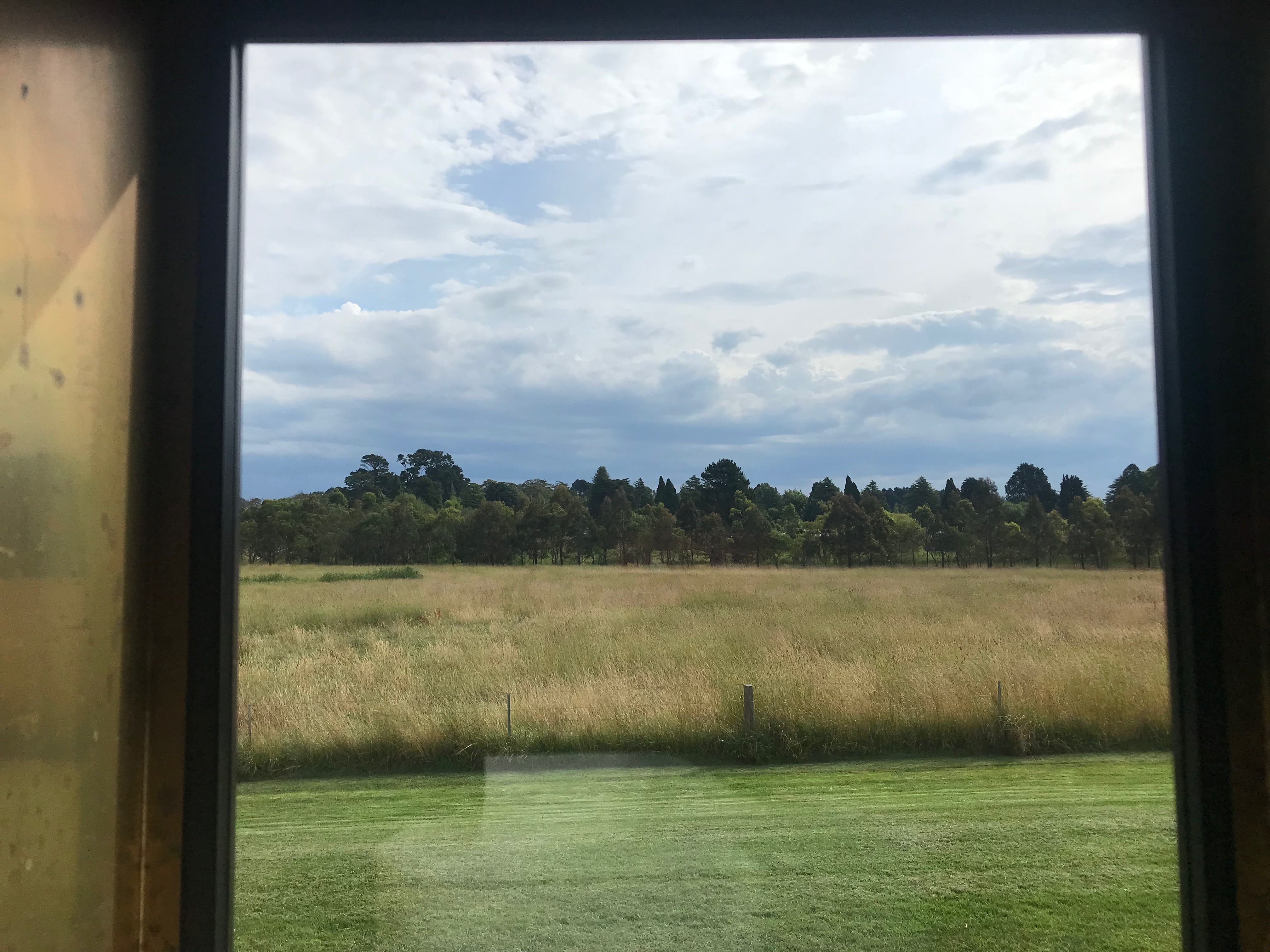
If they say our body is our temple, it involves a thorough clean out of all the rooms, looking under the floorboards, behind the curtains and below the windowsills.

Not easy but worth it for some level of peace on the other side.

If the ‘how’ question remains unanswered, it takes time and effort to retro fit this personalised journey. I needed to call in my support crew (women who were ahead of me), educate myself about this transition and ask for support from multiple sources. I’m still doing it.
Aging and Caring for Parents

‘The bittersweet side of appreciating life’s most precious moments is the unbearable awareness that those moments are passing’ Marc Parent

Supporting my dad at the end of his life is just that bittersweet. It’s full of anxiety, frustration and exhaustion as his pain levels increase, and his medical and surgical options reduce due to his fragility and chronic disease. It is a tightrope of stress, yet there are these moments of being incredibly aware of time, how exquisitely precious it is.

Will this be the last time I visit?

In his vulnerability, my dad has unlocked this softer side, where he cries and says the things he never said before. He apologises for being an arsehole at times, for being an absent parent, for choosing to focus on business over family, all the decisions he made, when he had his health and arrogance. Now he is a more stooped version, with all the time in the world, craving any scrap of attention his children can give him in their own busy lives. He asks about my health, my kids, my partner and shows a genuine interest in our lives.

Dr Nicole LePera, aka the holistic psychologist, a writer and instagram phenomenon, in researching her latest book discussed the premise that an emotionally available and healthy father is one of the most underrated forms of healthcare. Children can learn to regulate emotions and be comfortable with conflict resolution given steady role models. The data is striking in that present fathers reduce the risk of addiction, crime, mental health conditions, low self worth and domestic violence. In short, if men are able to develop emotionally (with the knock on effect to the next generation), our society could look very different and be much more functional.

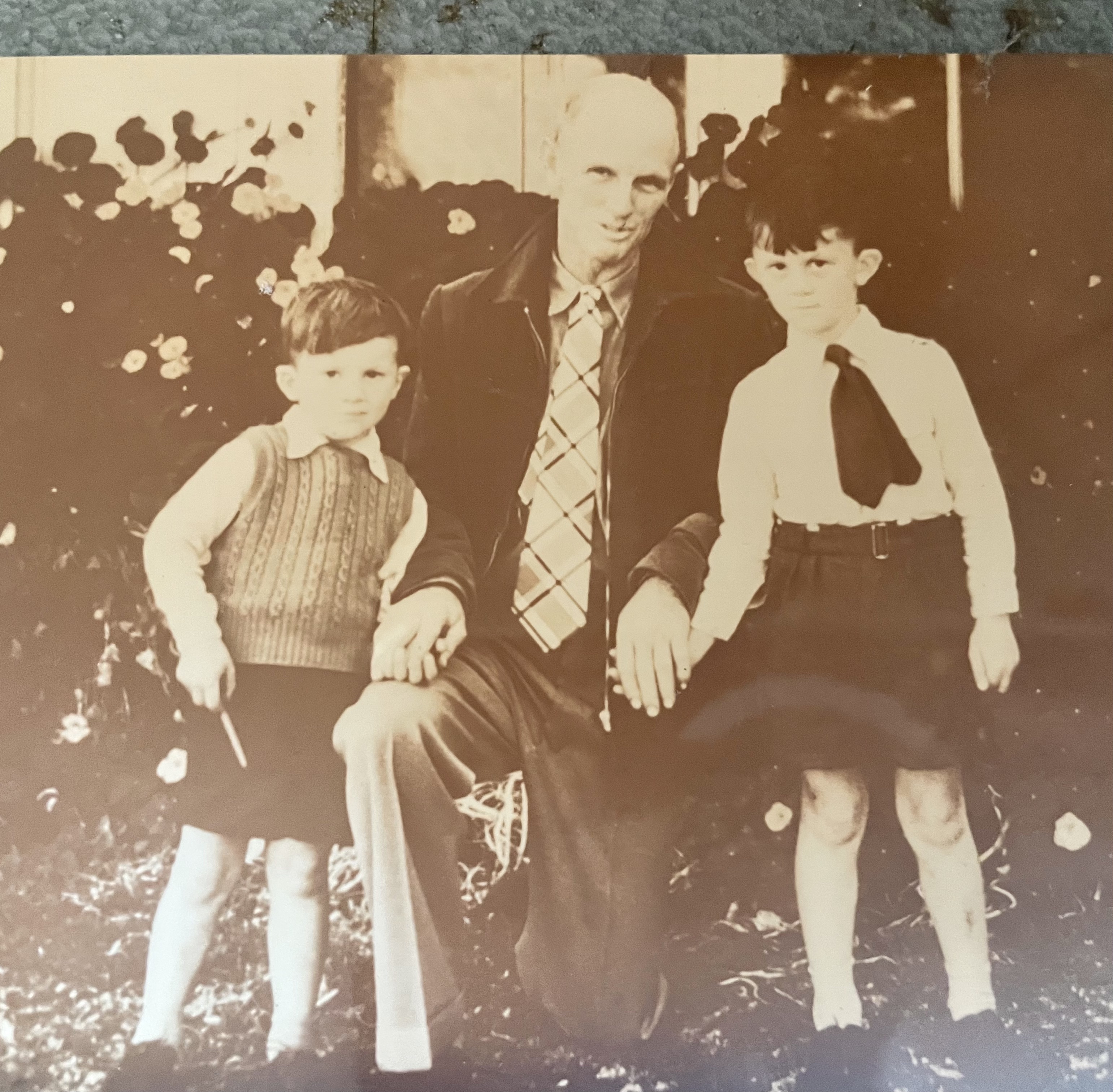
My own father lost his father at 6 years old. Without any discussion around mental health or grief processing, the family got on with things the best they knew how, with a stiff upper lip and a protestant work ethic necessary when you are a farming family. This is not an isolated story, both my grandfather and great- grandfather died in tragic farming accidents. My grandfather died in a plane crash and the other was decapitated standing next to a logging truck. An ever present risk of living on the land.

Maybe this why I feel drawn to emotional expression and my line of work, supporting people through grief and mental health challenges. Seeing what can happen when there is inadequate support and insufficient ways to deal with grief; limited conversations about death generally and a fear of being vulnerable or in need of help overlaid by a culture of numbing, suppressing and bloody well getting on with it.

Photo taken just before my grandfather’s death with his two sons (my father right and uncle left)

Thankfully men are stepping up and claiming a much more active parenting role. There is hope that this trajectory will continue and as I spy my sons being attentive and caring towards their friends and able to talk about their emotions, I sigh with relief. The changes can be night and day, comparing how our fathers were raised to be ‘men’ to not cry or show emotion and they had to basically shut down in order to cope, versus how children are raised in more emotionally attuned and supportive environments today.

Yet as a society we have a way to go considering the rates of violence against women and the general malaise of our society. Approximately 75% of completed suicides are men. What can we do? Build communities where we actively reach out for support and normalise asking for help, ideally men supporting men.

People can change. Age has a way of doing that in the way life has a way of kicking our butts, humbling us and forcing growth. As I talk with my dad, he frets about the imminent cyclone affecting his family, and I see how much he cares. There is talk of him moving into care in my hometown. He is excited by the idea of being close to us, seeing his grandsons. Understanding that on some level, it is still all about him, that in his fragility, he needs me especially as my sister steps back due to having her own family and being somewhat burnt out caring for him.

It is bittersweet in the sense of all those years of missed opportunities where my dad was too busy, for example when at age 7, he put me on a plane back from Disneyland alone, with a layover at his friends, people I’d never met, because he wanted to stay in LA after he met a lady. WTF. My hard-won sense of self worth that came from having an absent father. Yet, the anger or hurt is no longer there, instead after processing it (took years), I’m left with a sense of acceptance of how things played out. That a series of events led me to forgiveness on my own terms, a process that cannot be moralised or half-arsed, rather an inner journey that developed my character in unexpected ways. And for that, with hindsight I’m grateful.

Life is unpredictable, sometimes cut short, without the space for resolution. With the time we have left together, I realise life is about healing, in the way that my dad is now able to give to me what he himself lost too soon, and within his limited capacity, he can be a loving and present father.